Introduction
It is common for children to fall sick, especially in the early years. Their immune system is still developing, which makes them more vulnerable to infections like cold, cough, and fever.
For parents, the challenge is not just managing the illness but knowing when it is mild and when it needs medical attention. Understanding this difference helps avoid both unnecessary panic and dangerous delays.
Why Children Fall Sick Frequently
Children are exposed to new environments, foods, and infections as they grow. Their immune system learns by responding to these exposures.
Frequent minor illnesses are often a normal part of this process. However, proper care and timely attention are important to prevent complications.
Common Childhood Illnesses
Some of the most common illnesses in children include:
- Cold and cough
- Fever
- Stomach infections (vomiting or diarrhea)
- Throat infections
- Skin infections
Most of these are mild and improve with basic care.
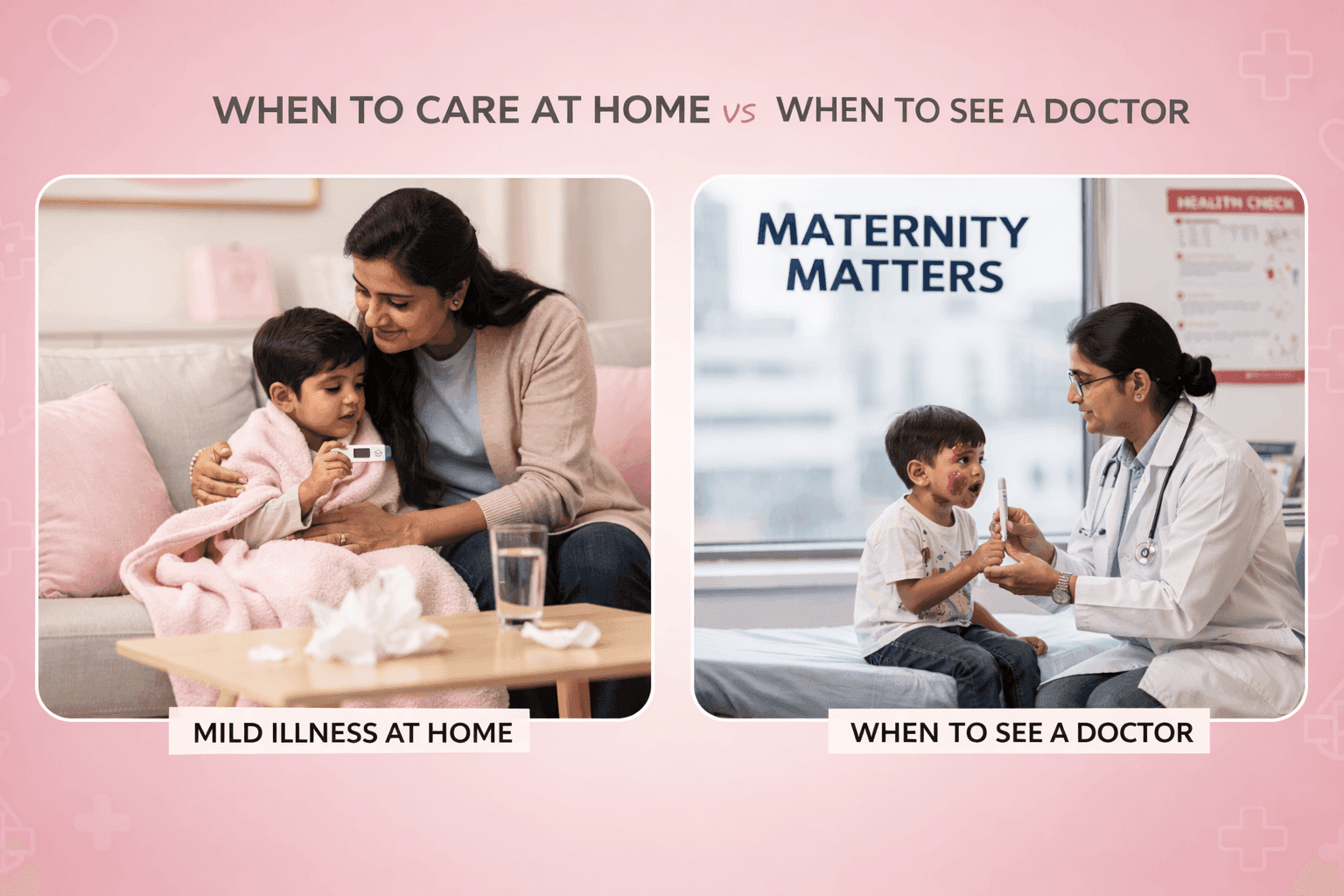
Home Care for Mild Illness
For common mild illnesses, simple care at home is often enough:
- Ensure the child gets enough rest
- Keep the child well hydrated
- Provide light and nutritious food
- Monitor temperature if fever is present
Avoid giving medicines without proper guidance. Many mild illnesses resolve naturally with supportive care.
Use of Medicines
Medicines should be used carefully and only when necessary.
- Fever medicines may be given as advised by a doctor
- Antibiotics should not be used without prescription
- Avoid self-medication based on previous illness
Incorrect use of medicines can lead to complications or resistance.
Warning Signs That Need Medical Attention
Certain symptoms indicate that the illness may not be mild and requires medical evaluation:
- High or persistent fever
- Difficulty in breathing
- Repeated vomiting or diarrhea
- Poor feeding or refusal to eat
- Unusual sleepiness or low activity
- Dehydration (dry mouth, less urination)
These signs should not be ignored.
Importance of Early Diagnosis
Early medical consultation helps:
- Identify the exact cause of illness
- Start appropriate treatment
- Prevent worsening of the condition
Waiting too long can sometimes make treatment more difficult.
Common Mistakes Parents Make
Some common mistakes can delay recovery:
- Ignoring early symptoms
- Overusing home remedies
- Giving leftover medicines
- Delaying doctor consultation
Balanced judgment is important—neither panic nor neglect.
Preventing Common Illnesses
Prevention plays a key role in child health:
- Maintain proper hygiene
- Ensure timely vaccinations
- Provide balanced nutrition
- Avoid exposure to infections when possible
Strong immunity reduces the frequency and severity of illnesses.
Conclusion
Childhood illnesses are a normal part of growing up, but understanding how to manage them makes a significant difference. Mild conditions can often be handled at home with proper care, while warning signs require timely medical attention.
The key is to observe your child carefully and respond appropriately. Early action, when needed, helps prevent complications and ensures faster recovery.
With the right balance of home care and medical guidance, parents can confidently manage their child’s health and well-being.